

The Faraday Institute in the UK released the report “From Minerals to Manufacturing: Africa’s Competitiveness in the Global Battery Supply Chain”, which reveals cost-competitive investment opportunities in Africa’s battery supply chain.
With the rapid development of the electric vehicle industry, the demand for power batteries is increasing rapidly. Africa has abundant battery raw materials and is a very important battery market. The following will introduce the importance of Africa in the battery market, the advantages of Africa in developing the battery industry, and the environmental challenges it faces.
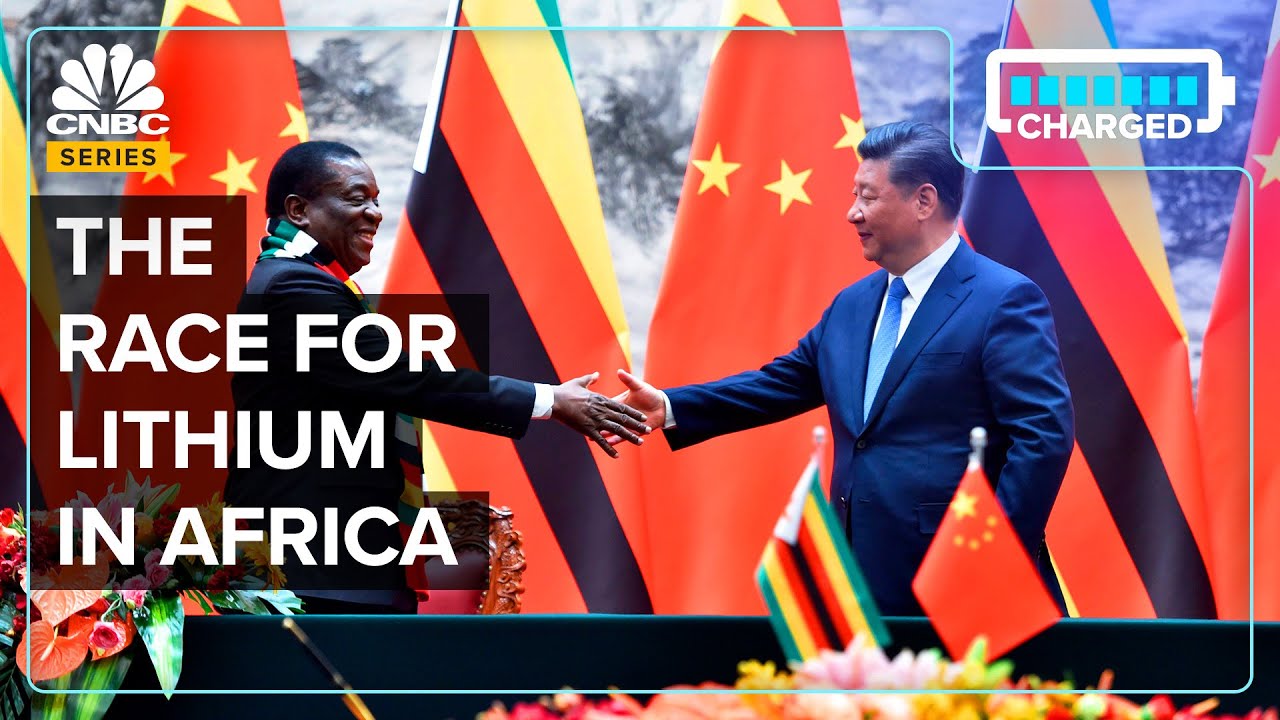

Africa’s Battery Manufacturing Importance
The report points out that Africa is facing a significant opportunity to become a global player in the battery manufacturing industry. The global battery market is undergoing a transformation as electric vehicles (EVs) and renewable energy storage solutions become increasingly popular.
As the United States and the European Union work to reduce their dependence on China for battery supply, Africa’s strategic position becomes increasingly important, thanks to its abundant reserves of basic raw materials, and by 2030, Africa’s refining cost advantage will be as high as 40% compared with its global peers.
Global battery demand is expected to increase to 7.8TWh by 2035, with China, the United States and Europe accounting for 80% of this demand. Although Africa currently accounts for only a small part of global battery demand, the continent’s battery energy storage system (BESS) market is expected to grow significantly by 2030. To take advantage of this potential, Africa must achieve economies of scale, aiming for a minimum production capacity of 10-15GWh per super factory and seeking to serve the global market.
The key opportunities in the African battery manufacturing value chain show that refining, cell manufacturing and battery pack assembly are the most attractive opportunities, and African countries need to take strategic steps to secure their position in the global battery manufacturing sector.

Key Opportunities in the African Battery Manufacturing Value Chain
Refining: Unleashing cost competitiveness
Raw material refining is a key step in the battery manufacturing process. By 2030, African countries can leverage their access to key battery components such as lithium, nickel, manganese and copper to achieve cost competitiveness in refining compared to the rest of the world, lay a solid foundation for refining activities, and achieve full integration between mines and refineries.
Lithium: African integrated lithium refineries can gain competitive advantages through raw material integration, potentially making them 35-40% more competitive than refineries in China, Canada, the United States and Australia. Lithium refineries in Africa could generate approximately $400 million in revenue per year and create 100-300 direct jobs.
Nickel: Integration with mines and leveraging high-quality deposit types could provide African countries with a 10-15% nickel refining cost advantage over global competitors. Nickel refineries could generate approximately $2.3 billion in revenue and 1,200-1,400 direct jobs per year.
Manganese: African integrated companies can compete effectively with non-integrated Chinese producers by refining manganese at 10-15% lower costs. Manganese refineries in Africa can generate revenues of about $100 million per year and create 700-900 direct jobs.
Copper: African integrated copper refineries can achieve a 25-30% cost advantage through raw material integration and copper ore quality. Copper refineries can generate revenues of about $4 billion per year and create 700-900 direct jobs.

Battery Manufacturing: Accessing Global Markets
Preliminary analysis suggests that countries such as Tanzania and Morocco can achieve cost-competitive battery production under certain conditions. For example, Morocco can produce LFP batteries that sell for $72/kWh and Tanzania can produce LFP batteries that sell for $68/kWh, compared to $68/kWh in Europe, which benefits from subsidies.
However, to compete effectively on the global stage, African governments need to reach favorable trade agreements with Europe, implement subsidy programs, and establish special economic zones. These measures will help local manufacturers achieve the necessary scale and cost competitiveness to serve international markets.
Battery Pack Assembly: Leveraging Local Capabilities
Environmental Challenges From Increased Battery Supply
While Africa currently struggles to become a leader in battery recycling due to limited waste management initiatives, developing a strategic plan for battery recycling is critical. Effectively managing battery recycling is essential to mitigate environmental impacts and continue to attract investment. Governments and development partners must develop strategies and technologies for viable recycling and battery disposal solutions.
Leveraging advances in modular recycling technologies developed elsewhere could provide a pathway for Africa to address its recycling challenges and contribute to a sustainable battery manufacturing ecosystem.

Conclusion
Africa has abundant key raw materials for the production of a wide range of battery types, including lithium ion batteries. Coupled with strategic and complementary investments in infrastructure, including reliable power supply, transportation networks, advanced manufacturing facilities and policy support, the continent could become a potential global leader in battery manufacturing.
By developing integrated value chains that improve cost competitiveness, implementing subsidy programs to support local manufacturers and attracting investment, African countries can unlock huge economic opportunities and contribute to the global transition to clean energy.
To realize this potential, African players need to prioritize cross-continental collaboration with private sector players, governments and international financiers, as well as R&D to drive innovation in battery technology, recycling solutions and sustainable manufacturing practices.


