

The most widely used batteries in the current market are lithium iron phosphate batteries and ternary lithium batteries, which are usually used in electric vehicles, electric motorcycles and other fields. Thanks to the continuous breakthroughs in battery technology, the types of batteries are increasing rapidly, such as solid state batteries in the research stage and semi-solid state batteries entering the market, which provide stable energy support for human social activities.
Do you know graphene battery? This article will continue to deeply understand the principles, advantages and disadvantages, energy density, performance and other aspects of graphene battery, and increase users’ understanding of different types of batteries.
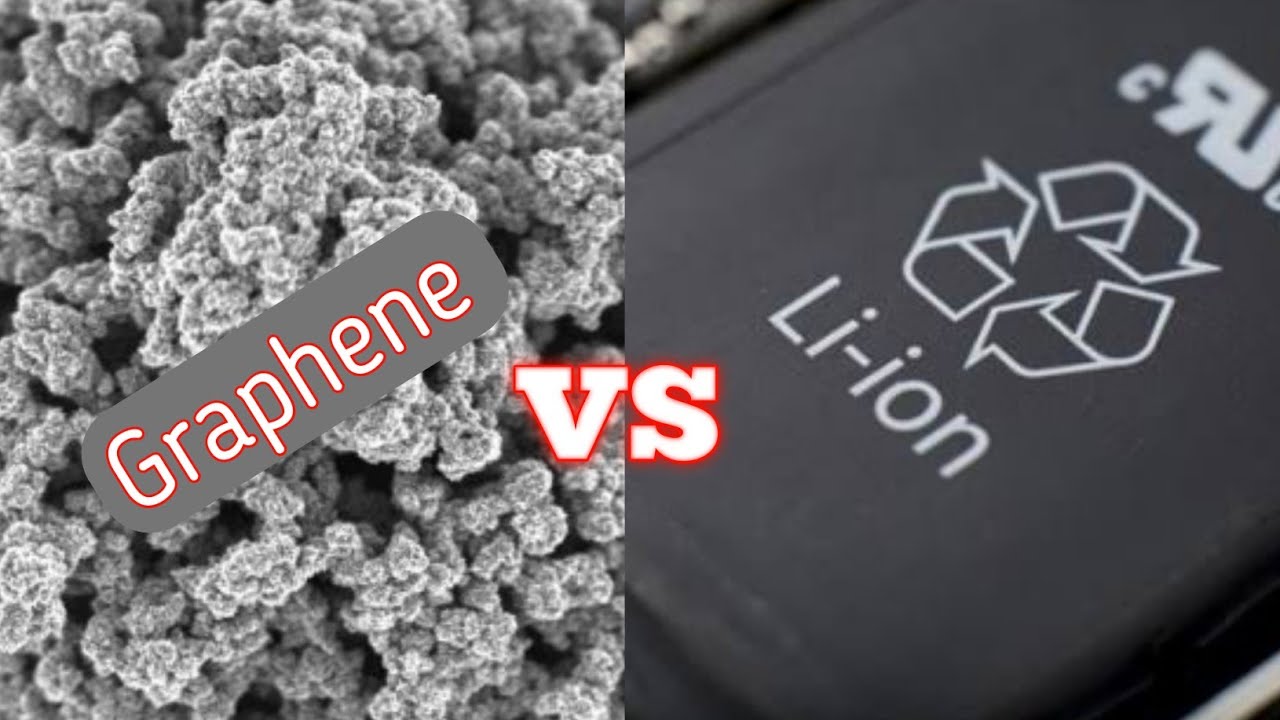

Working Principle of Graphene Battery
Mainly based on its excellent electrical conductivity and physical properties. The two-dimensional structure of graphene makes it one of the strongest materials known to date, and it also has extremely high electrical conductivity, which allows electrons to move very quickly in graphene. This provides graphene batteries with powerful energy storage and fast charging capabilities.
Specifically, the cathode of a graphene battery is usually made of graphene composite materials, and the anode is made of lithium titanate or tin-based materials. When the battery is charged, electrons flow from the cathode to the anode, and the current is generated through an external circuit to generate power. When discharging, electrons return from the anode to the cathode to form a complete circuit.
The Core Advantages and Disadvantages of Graphene Batteries
Graphene batteries are not made entirely of graphene, but use graphene to improve electrode materials or electrolytes, thereby significantly improving performance:
Ultra-fast charging: The electron migration speed of graphene is 100 times that of silicon, which can significantly reduce internal resistance and increase charging speed by 5 to 10 times. Experiments show that graphene battery can be fully charged in a few minutes (such as the “graphene-assisted lithium-ion battery” that Huawei has demonstrated).
Ultra-high energy density: Graphene has a large specific surface area (2630 m²/g), which can absorb more lithium ions, and its theoretical energy density is 2 to 5 times that of lithium batteries. This means that the range of electric vehicles may exceed 1,000 kilometers, and the range of mobile phones may be extended several times.
Ultra-long life: The stable structure of graphene can reduce the loss of electrode materials during charging and discharging, and the cycle life can reach tens of thousands of times (traditional lithium batteries are only 500 to 1,000 times).
Safety and thermal management: Graphene’s high thermal conductivity (5300 W/mK) can quickly dissipate heat and reduce the risk of battery overheating and fire.
Disadvantages
- High cost: The preparation technology of graphene is complex and costly, which makes the production cost of graphene batteries high, limiting its large-scale popularization and application.
- The preparation process needs to be improved: At present, the preparation process of graphene battery is not mature enough, and there are problems such as low production efficiency and poor product consistency, which makes it difficult to achieve large-scale, high-quality industrial production.
- There is a gap between theory and practice: Although graphene batteries have many excellent properties in theory, in practical applications, due to the influence of various factors, such as the complexity of chemical reactions inside the battery, the compatibility of electrodes and electrolytes, etc., its performance is often difficult to fully meet theoretical expectations.

Energy Density of Graphene Batteries vs. Conventional Batteries
The energy density of graphene batteries is significantly higher than that of ordinary batteries, but the specific multiples vary depending on the type of ordinary batteries and the technical level of graphene batteries.
Taking common lithium ion batteries and lead-acid batteries as examples, the energy density of ordinary lithium-ion batteries is about 100-150Wh/kg, and the best can reach 200Wh/kg. The energy density of mobile phone lithium-ion batteries is generally around 300-400Wh/kg, the energy density of ternary lithium batteries for electric vehicles is around 200-300Wh/kg, the energy density of lithium iron phosphate batteries is around 160-200Wh/kg, and the energy density of ordinary lead-acid batteries is about 40Wh/kg.
There are various data on the energy density of graphene battery, some of which are more than 600Wh/kg, which is about 5 times that of ordinary lithium batteries. It is also said that it can reach 150-160Wh/kg, which is higher than lithium-ion batteries. In the aviation field, the energy density of graphene aviation batteries is more than 50% higher than that of traditional batteries. In addition, some studies have shown that replacing the single-layer silicon dioxide in traditional lithium-ion transistors with graphene films can double the battery energy density.
Overall, the energy density of graphene batteries is several times or even more than ten times that of ordinary lead-acid batteries. Compared with ordinary lithium-ion batteries, it can also reach about 2-5 times or even higher. The specific values will change with the development and improvement of technology.

How Do Graphene Batteries Perform at Different Temperatures?
High temperature environment
Charge and discharge efficiency: In high temperature environment, the charge and discharge efficiency of graphene batteries may be improved. Because higher temperature will accelerate the chemical reaction rate inside the battery, the ion migration speed will also increase, thus shortening the charging time to a certain extent and improving the discharge performance.
Capacity: However, the capacity of the battery may gradually decrease in a high temperature environment for a long time. This is because high temperature will accelerate the aging of the electrode materials inside the battery and the occurrence of side reactions, resulting in the loss of active substances, which in turn affects the energy storage capacity of the battery.
Safety: High temperature may also increase the safety risk of the battery. Although graphene has good heat dissipation performance, when the ambient temperature is too high, the battery may still overheat, and even cause safety problems such as thermal runaway.
Low temperature environment
Charging and discharging efficiency: Compared with ordinary batteries, graphene battery has obvious advantages in charging and discharging efficiency in low temperature environments. Due to the special structure and performance of graphene, it can inhibit the polarization phenomenon inside the battery at low temperatures to a certain extent, making the battery charging and discharging process relatively smooth, the charging time will not be excessively extended, and the discharge performance can be well maintained.
Capacity: Ordinary batteries often experience a significant drop in capacity at low temperatures, while the capacity loss of graphene batteries is relatively small. It can maintain a high battery capacity in a low temperature environment. For example, at -20℃, it can still maintain more than 80% of the capacity at room temperature, ensuring the normal use of the device in a cold environment.
However, although the performance of graphene batteries is better than that of ordinary batteries at different temperatures, extreme high or low temperature environments will still have a certain impact on them. In actual use, the battery should be avoided as much as possible in such a harsh environment.

How to Use Graphene Battery Correctly
- Charging
Avoid overcharging: When the battery is fully charged, unplug the charger in time to avoid long-term overcharging to avoid affecting the battery life.
Use the original charger: Use the original charger that matches the battery specifications to ensure that the charging voltage and current are stable to prevent damage to the battery due to mismatch.
Regular charging: Even if the battery is not used for a long time, it should be charged every once in a while to avoid excessive discharge of the battery and resulting in performance degradation.
- Discharge
Avoid over-discharge: Try to avoid exhausting the battery. When the battery is less than 20%, charge it in time. Over-discharge will cause irreversible damage to the battery.
Use equipment properly: When using equipment equipped with graphene battery, avoid long-term high-load operation and reduce high-current discharge to extend the battery life.
- Storage
Suitable environment: Store the battery in a dry, cool, ventilated environment, avoid high temperature, humidity and corrosive gas environment, and the temperature should be controlled between 5℃-35℃.
Correct storage status: If the battery needs to be stored for a long time, it is recommended to charge the battery to about 50%-60% before storing it, and perform charge and discharge maintenance on the battery every once in a while.

How Do Graphene Battery Change the Energy Landscape?
- Electric vehicle revolution
Eliminate “range anxiety”: Graphene batteries can support ultra-fast charging (80% charge in 5 minutes) and ultra-long range (more than 1,000 kilometers), promoting electric vehicles to fully replace fuel vehicles.
Reduce costs: Long life means less frequent battery replacement and lower life cycle costs.
- Renewable energy storage
Wind and solar energy are intermittent and rely on efficient energy storage. The high energy density and fast charging and discharging characteristics of graphene batteries can optimize the grid energy storage system and improve the utilization rate of clean energy.
- Consumer electronics and wearable devices
Mobile phones, notebooks and other devices can be charged in seconds, and are smaller and lighter. Flexible graphene batteries can also be used in folding screen devices or medical implants.
- Aerospace and military
The high energy density and lightweight characteristics are suitable for weight-sensitive fields such as drones and satellites, and may even promote the commercialization of electric aircraft.

Challenges and Current Status of Graphene Batteries
Despite the broad prospects, graphene battery still face three major bottlenecks:
High mass production cost: The preparation process of high-quality graphene is complex and currently expensive (hundreds of yuan per gram).
Technical integration problem: How to perfectly embed graphene into the existing battery system (such as combining with silicon anode and solid electrolyte) still needs to be broken through.
Lack of standardization: The industry lacks a unified performance test standard and the commercialization process is slow.
Current progress: Some companies have launched “graphene-enhanced batteries” (such as GAC Aion’s “graphene-based super-fast charging battery”). Research hotspots have shifted to hybrid systems (such as graphene + silicon anode, graphene + solid electrolyte).
Future outlook short-term (5-10 years): Graphene is used as an additive to improve the performance of existing lithium batteries and is first used in high-end electric vehicles and energy storage systems.
Long-term (10-20 years): All-graphene electrode batteries or solid-state graphene batteries may be commercialized, completely changing the way energy is stored.
Conclusion
The above content introduces graphene battery in detail. Each battery type has its own advantages and disadvantages, so each type of battery has a suitable application field and can maximize the performance advantages of the battery in a certain field.
Although graphene batteries have not yet been widely used, the increase in battery types is also a major breakthrough in the battery field, providing rich energy options for more applications in the future.


